
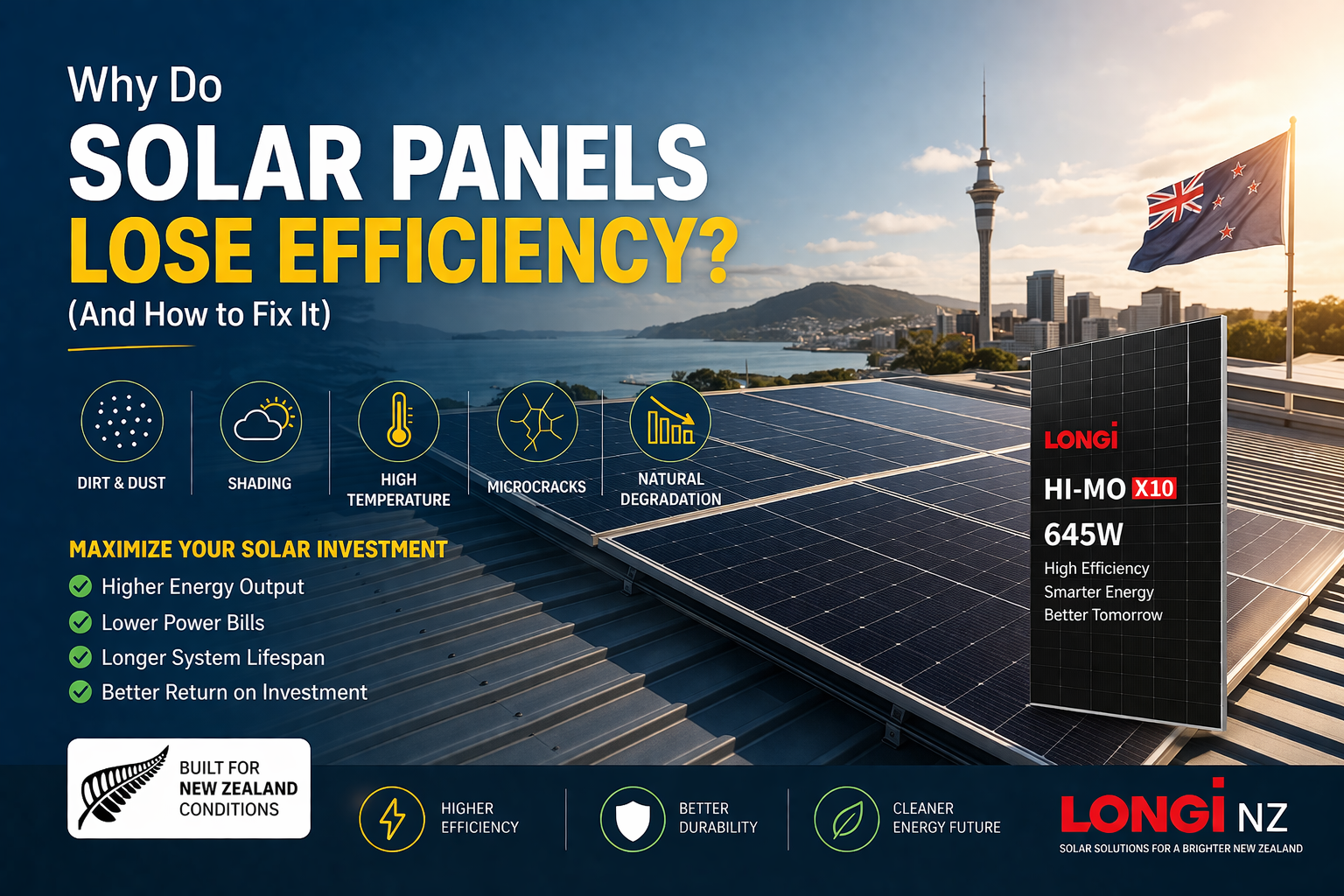
Why Do Solar Panels Lose Efficiency? (And How to Fix It) – A Complete Guide for New Zealand
If you’re investing in solar energy, you expect long-term performance and savings. But even the most advanced systems can experience efficiency loss over time. For homeowners and businesses exploring Longi NZ solutions, understanding why this happens—and how to fix it—is essential to maximize ROI.
In this guide, we’ll break down the real reasons solar panels lose efficiency, how it impacts systems like the LONGi Hi-MO X10 645W Solar Panel, and actionable ways to maintain peak performance in New Zealand conditions.
Why Do Solar Panels Lose Efficiency? (Longi NZ Guide)
Solar panels don’t suddenly stop working—but their performance gradually declines. This process is known as solar panel degradation, and it affects all brands to some degree.
- Most panels lose 0.3% to 0.8% efficiency per year
- After 25–30 years, panels typically operate at 80–90% capacity
Even premium panels like the LONGi Hi-MO X10 645W Solar Panel are engineered to minimize this loss—but understanding the causes helps you protect your investment.
Top Reasons Solar Panels Lose Efficiency (Longi NZ Insights)
1. Natural Degradation Over Time
All solar panels degrade due to prolonged exposure to UV radiation, temperature fluctuations, and environmental stress.
Key Insight: Premium panels degrade slower, meaning more energy output over decades.
2. Dirt, Dust, and Debris Build-Up
In many parts of New Zealand—especially rural or coastal areas—panels accumulate dust, pollen, bird droppings, and salt residue.
Impact: Efficiency can drop by 5% to 20% if panels aren’t cleaned regularly.
Fix:
- Clean panels every 6–12 months
- Use professional cleaning services if needed
3. Shading Issues
Even partial shading from trees, buildings, or chimneys can significantly reduce output.
Modern panels like the LONGi Hi-MO X10 645W Solar Panel include anti-shading technology to reduce losses.
Fix:
- Trim nearby trees
- Optimize panel placement
- Use microinverters or optimizers
4. High Temperatures (Thermal Loss)
Solar panels work best in sunlight—not excessive heat. High temperatures reduce efficiency due to thermal losses.
5. Microcracks and Physical Damage
Panels can develop microcracks due to wind, hail, or installation errors, reducing electrical flow.
Fix: Regular inspections and using high-quality panels.
6. Inverter Efficiency Loss
Inverters degrade over time, reducing system performance.
Fix: Replace inverters every 10–15 years.
7. Poor Installation
Incorrect tilt, orientation, or wiring can significantly impact efficiency.
Fix: Always work with certified installers.
How Longi NZ Panels Minimize Efficiency Loss
When comparing brands, Longi NZ solutions stand out because of their advanced engineering and durability.
- Low degradation rate
- High efficiency output (645W class panels)
- Anti-shading technology
- No front gridlines (better light absorption)
- Strong durability in harsh environments
Explore LONGi NZ Solar Solutions
Learn More About LONGi Technology
Practical Ways to Improve Solar Panel Efficiency
Regular Maintenance
- Clean panels twice a year
- Inspect for damage
- Monitor performance regularly
Optimize System Design
- Face panels north (in NZ)
- Use optimal tilt (30–40°)
- Avoid shading
Upgrade Components
- Replace old inverters
- Add battery storage
- Use smart monitoring systems
Benefits of Maintaining High Solar Efficiency
- Higher energy output
- Lower electricity bills
- Faster return on investment
- Longer system lifespan
- Reduced environmental impact
Use Cases – Who Benefits Most?
Homeowners
Reduce electricity bills and increase property value.
Businesses
Lower operational costs and improve sustainability.
Rural Users
Ensure consistent power and reduce reliance on generators.
Pros & Cons of Solar Panel Efficiency Decline
Pros
- Predictable degradation
- Long lifespan
- Warranty coverage up to 30 years
Cons
- Reduced output over time
- Maintenance required
- Possible repair costs
Longi NZ vs Standard Panels – Efficiency Comparison
| Feature | LONGi Panels | Standard Panels |
|---|---|---|
| Degradation Rate | Low | Moderate to High |
| Efficiency | High (645W+) | Moderate |
| Anti-Shading | Yes | Limited |
| Lifespan | 25–30 years | 20–25 years |
| Heat Performance | Better | Average |
FAQs – Solar Panel Efficiency
Why do solar panels lose efficiency over time?
Due to UV exposure, environmental factors, and material degradation.
How much efficiency do solar panels lose each year?
Typically around 0.5% annually.
Do dirty panels affect performance?
Yes, they can reduce efficiency by up to 20%.
Do high temperatures reduce efficiency?
Yes, excessive heat lowers performance.
How can I improve efficiency?
Clean panels, avoid shading, and maintain components.
Are LONGi panels better?
Yes, they offer higher efficiency and lower degradation rates.
Conclusion – Maximize Performance with Longi NZ
Solar panel efficiency loss is natural—but manageable. With the right technology, maintenance, and installation, you can significantly reduce performance decline.
Choosing Longi NZ solutions and panels like the LONGi Hi-MO X10 645W Solar Panel ensures long-term reliability, higher output, and better ROI.
Explore LONGi NZ Solutions Today